
DIY SHIBORI DESIGNS
- Jul 6, 2016
- 3 min read
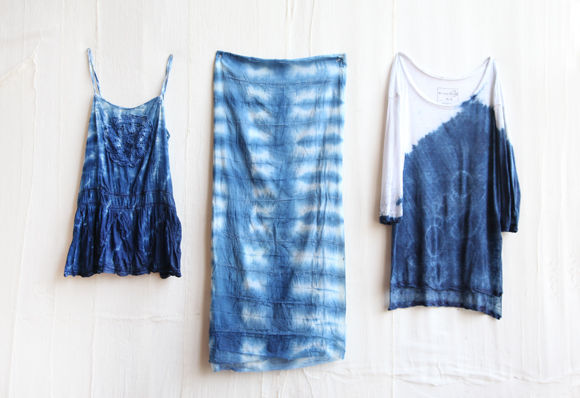
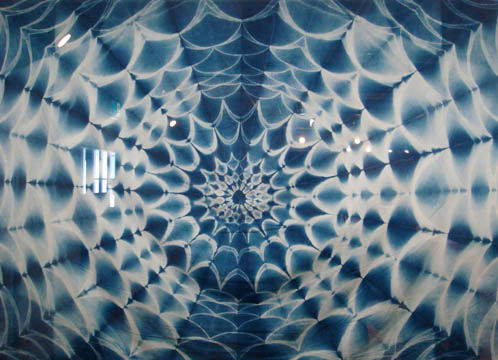
Shibori is a Japanese dyeing technique that typically involves folding, twisting or bunching cloth and binding it, then dyeing it in indigo. Shibori is the Japanese word for a variety of ways of embellishing textiles by shaping cloth and securing it before dyeing. The word comes from the verb root shiboru, "to wring, squeeze, press." Whatever is used to bind the fabric will resist the dye, resulting in areas of the cloth that take the distinctive blue dye in patterns created by the resistance, and other areas of the cloth that remain white. Shibori is a very vast technique and there are tons of ways to do it, creating numerous patterns.
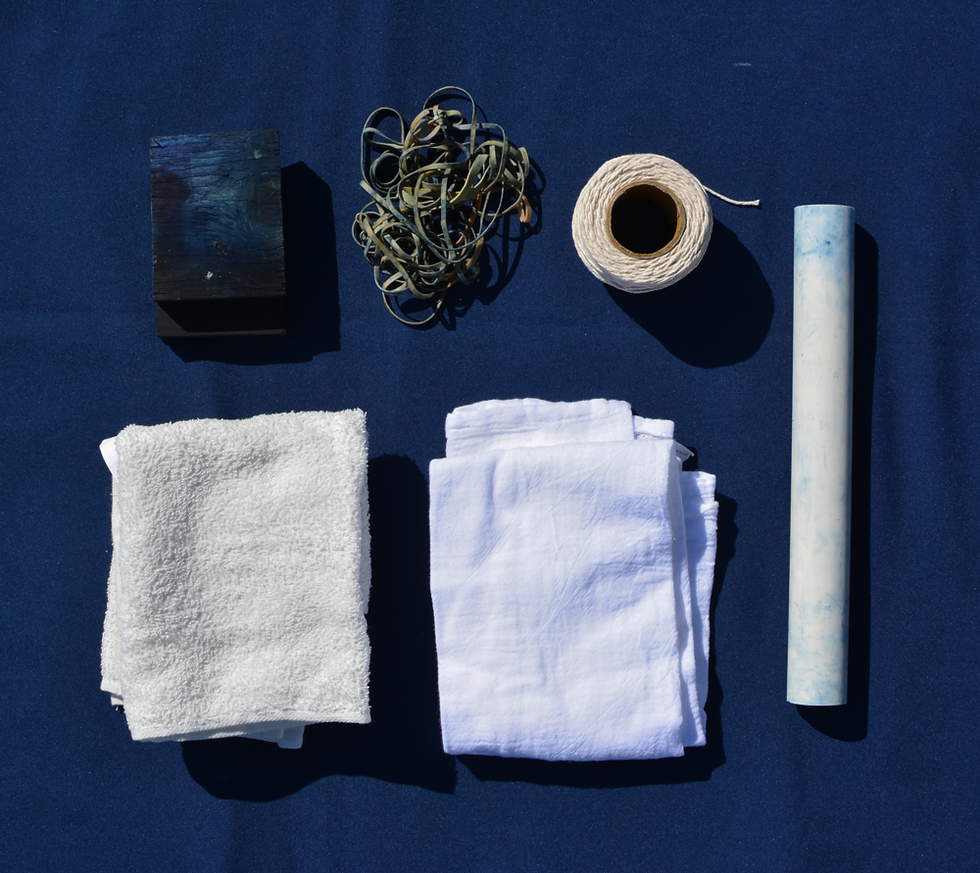
Things you need You’ll need indigo dye, wood blocks, rubber bands and rubber gloves. Items to dye: Only natural fibers will accept dye, so be sure to steer away from synthetics. You can choose to dye simple fabric yardage which you can then make into anything at all, or you can dye ready-made fabric items. Cotton responds really well to indigo dye, so cotton is a great choice for your first attempts. Be sure to wash and fully dry before using. You’ll also need a large container to mix the dye in (one with an air-tight lid is ideal if you want to keep the dye longer than a day, as oxygen will kill the indigo dye), and if you’re working indoors, you’ll want some plastic drop cloths to protect your surfaces from the dye.
Start by mixing your indigo dye according to the package directions. Be aware that indigo dye is affected by exposure to oxygen, so try to keep the container covered as much as possible, and avoid stirring it aggressively or splashing it, which will introduce oxygen to the liquid. Once you’ve folded your fabric, it’s time to dye! First, soak your folded and bound fabric in water, then squeeze it out.
Now, gently submerge your fabric in the dye. Most fabric will float, so you have to hold in under the surface with your hands or possibly weigh it down (but be aware that if your dye has been sitting for any length of time there may be sediment on the bottom of the container, and it’s a good idea to avoid resting your fabric in the sediment. So it’s often best to just hold the fabric under the surface of the liquid with your hands).
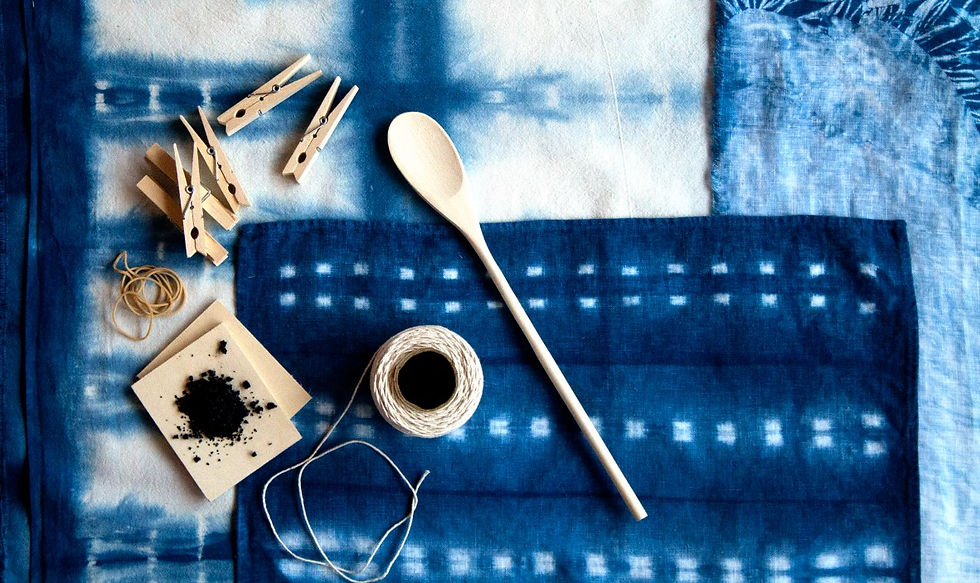
You can soak your fabric for almost any length of time; we found that 10 minutes is usually a good bet. You would think that in 10 minutes, the dye would completely soak through all layers of fabric and dye the whole piece solid blue, but it doesn’t! The layers of folded fabric, along with the wood, rubber bands, or whatever binding method you’re using, will prevent the dye from thoroughly soaking the fabric. Outer edges will take on the dye, but inner areas will not – and that’s what creates the pattern.
[You can try soaking a piece for one, ten, and twenty minutes to see the results that will produce. Short soaks result in thin lines of blue with lots of distinct white space, and longer soaks result in more blue and more bleeding of the blue onto the white. Here’s the cool part – when you remove your fabric from the indigo dye, your fabric will be yellow-green, not blue! That’s normal.
Just let the fabric sit out in the air for a few minutes, and as it oxidizes, it will turn from green to the distinctive indigo blue. You can let it oxidize while it’s still folded, or you can unfold it now before it oxidizes. If you leave it folded while it oxidizes, the dye will continue to soak into the fabric, and you’ll have more bleeding in your finished piece. If you unfold it now, you’ll see less bleeding in the finished piece.
It can take anywhere from a couple of minutes to 20 minutes for your piece to fully oxidize, so just hang out and watch your design emerge! During this time, the dye will continue to bleed a tiny bit, and the color will deepen – so you can never fully know exactly what result you’ll get, which is part of the fun. Once your piece has oxidized, all that’s left to do is rinse your fabric in water, squeeze it out, and let it dry.


Comments